Showing posts with label Oxford University Press. Show all posts

Thursday, February 8, 2024

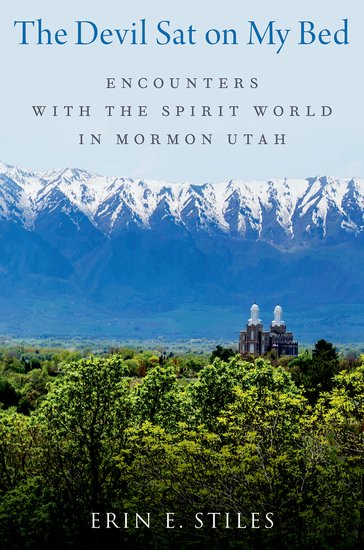
Book takes a look at all those spirit visits we Mormons receive


Review by Doug Gibson

If you are a longtime Mormon like me, you know a healthy amount of the stories out there. There's that missionary who was too confident in his priesthood power and actually summoned a demon. You know how that ended; he tempted evil, and was found with lots of broken bones.

Or there's the story of seeing a large, dark creature. He turns, and his eyes, they're the eyes of Cain! The Spirit whispers, "Stay away." You run.

But there's positive tales out there: It's World War II, and a weary soldier asks a stranger when this cursed war will end. The stranger gives a date. The war ends on that date. It must have been one of the Three Nephites!

I'm taking those yarns, which pop up everywhere, with lots of salt. We've all heard them. But all have a firmer provenance. 

I'm not skeptical of visits from the spirit world, good and bad. The Church of Jesus Christ of Latter-day Saints is a religion that preaches personal revelation. That includes the belief that we can sense, even see and commune -- rarely -- with spirits both dead and yet to be born. On a personal note, I have never had a vision or heard a voice, but I believe I have felt the unseen, spiritual presence/love/support from my deceased son, and my deceased parents. My mother believed she saw the profile of Jesus Christ in the Los Angeles Latter-day Saint temple. Over decades I've shared experiences --- mostly with LDS peers --- of what we felt, heard or saw. And, I even claim to have sensed and felt negative spirits during my life.

It doesn't make us odd -- it makes us Mormons. 

Erin Stiles is a professor at University of Nevada, Reno. She was raised in Cache County, located in northern Utah. She has authored a new, fascinating book, "The Devil Sat on My Bed -- Encounters with the Spirit World in Northern Utah," Oxford University Press, 2024.

Stiles is not a member of the LDS Church, but through her life experiences and research she has a strong understanding of Mormon culture. As she notes, spiritual encounters underscore a type of collective salvation, members of a familial lineage -- alive, dead or not yet born -- working in tandem to influence or prod family members through what Mormons call The Plan of Salvation.

Stiles recounts examples, gleaned through personal interviews and research through archives. One is a long-deceased mother who communicates to her daughter through voice and text messages. In one message, the deceased mother laments that she didn't spend more time with her daughter. Others include adults who talk about meeting spiritual children. Later a child is born who resembles the spirit. 

These good spirits often have names, or the living person senses they are a descendant, and later discovers that to be the case.

As noted, Mormons tend to see morality as a concept and righteousness as a verb. That helps understand why Mormons are receptive to spiritual encounters. Mormonism regards works as paired with faith in receiving a degree of salvation or higher. The spirit world is divided between a type of paradise and "spirit prison." The latter is not really a prison. It represents people who need to be taught Latter-day Saint principles and ordinances of the Gospel. Under Mormon theology, it makes sense to continue religious duties after death. I can't tell you how many times I have heard at LDS funerals where someone will remark that "Brother or Sister (so and so) are really busy teaching the Gospel" in the spirit world.

Temple work is important in the LDS faith because it's designed to provide the deceased a choice to follow what LDS faithful believe are covenants necessary toward a higher degree of salvation, called exaltation. As Stiles notes, it is always a choice of the person. It's not a decree. The idea of agency is important within the faith. 

For that reason, unsurprisingly, Stiles has gathered accounts of spiritual encounters within temples, interaction with spirits who have chosen to receive the post-mortal ordinances. I found fascinating accounts of people performing baptisms for the dead seeing spiritual people watching the baptisms. After every baptism, a spirit would leave, presumably satisfied with his or her baptism.

One of the accounts recall a child spirit left alone after the series of baptisms. This child, seen by one of those performing the ordinance, appeared very distraught. The officiator was asked to review the list of deceased slated for proxy baptism. It was discovered the man had missed one to be baptized. Once that occurred, the child spirit left.

I remember one of my late sisters telling me that she had conversed with the deceased spirit of one of our aunts, who died when I was very young. She eagerly conversed with my sibling, still a child. Frankly, I believe her. These are not carnival tricks to Latter-day Saints. Spiritual encounters occur, as the book notes, to guide those on earth, to protect them, and -- most in my opinion -- to comfort. Expressions of love extend beyond the grave.

As Stiles notes, adversarial spiritual encounters are generally nameless. They include demons on beds, bad ouija board experiences, encounters with Cain. There are many accounts of missionaries dealing with bad spirits. Although the term demon is often used in popular culture, most Mormons would regard these visitors as being rebellious spirits who aligned with the devil, Lucifer, in the pre-existence and were cast out to -- ironically earth. They were denied bodies. Mormon theology considers the number to be a third of all people created.

An example in the book involves unseen spirit women who were whispering to missionaries late at night. The sounds were so loud the missionaries faced accusations of having girls in their rooms. I'm not sure about this one. It may derive from sexual frustration. However, as a missionary myself, we swapped tales of dealing with the adversary.  Another involves rebellious spirits attempting to enter the Logan LDS temple. This is a well-traveled tale. The spirits are stopped, but in some accounts do manage to disrupt temple activities. *

In both cases, males in the Mormon faith used what is called Priesthood authority to cast out the renegade spirits. The patriarchal culture of Mormonism provides near-absolute authority to males in ecclesiastical matters. Stiles notes that in the early years of the LDS Church, women had much more power to "perform ordinances" before church leaders cracked down on that in the early 20th century. Candid interviews with current members provide evidence that the future may hold a loosening on overly patriarchal attitudes on female participation in Gospel ordinances.

"The Devil Sat On My Bed ..." contains fascinating information. It brings to an academic setting what's long been discussed between families, in pews, in Sunday school, firesides, campouts, sleepovers, family reunions, and so on. What happens in northern Utah really happens just about everywhere in Mormon culture. Hopefully this book, which can be a tough read at times due to its academic style, will lead to more books on spiritual encounters and how they relate to Mormon theology and culture.


* I have no disagreement with Stiles' stance that most adversarial spirits are unnamed. However, I have spoken to a handful of people who have a feeling these bad spirits they encounter are acquaintances, or friends from the pre-existence, but chose to follow Satan. Given Mormon culture, I think that idea is worthy of further study.

Monday, October 4, 2021

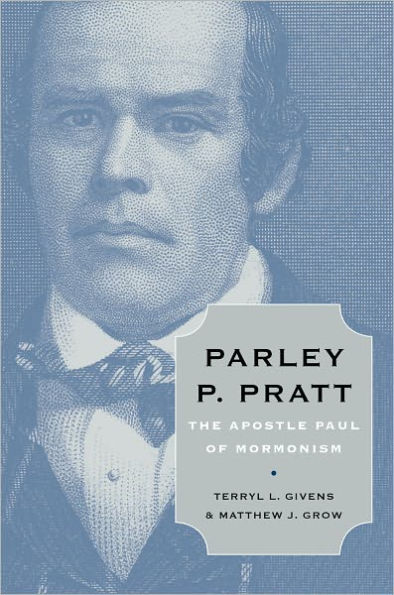
Interview with authors of Parley P. Pratt: The Apostle Paul of Mormonism


This interview was conducted in August of 2011, soon after the publication of the biography, Parley P. Pratt: The Apostle Paul of Mormonism, (reviewed by me here.) For various factors, it ended up in Wayback purgatory. It is now available at the Culture of Mormonism blog. I appreciate the input from authors Terryl Givens and Matthew J. Grow. Below is the 2011 post:

As Political Surf readers know, I mentioned the new biography of early Mormon leader Parley P. Pratt, “Parley P. Pratt: The Apostle Paul of Mormonism,” Oxford University Press, 2011, by Terryl L. Givens and Matthew J. Grow, in a previous blog that dealt with Pratt’s death (read). I will be reviewing the biography soon in the print edition of The Standard-Examiner. However, I had the opportunity to ask the authors, Givens and Grow, some questions about Pratt, his contemporaries, and the biography. The results are below:

Q: Did Pratt view his calling in life as an apostle to be as the apostles in the Book of Acts, such as as receiving visions, being persecuted or martyred, as Stephen, performing miracles, debating disbelievers, gathering and counseling members, and preaching without recompense and living in poverty?

A:  There is no doubt that Pratt saw his calling as an apostle as consistent with the New Testament pattern of apostleship. He was a fervent restorationist, was convinced that Joseph Smith had received the authority and keys necessary to restore the kingdom of God, and personally experienced those spiritual gifts such as healing that he believed were sure evidence of an authentic restoration. His willingness to leave his family behind time and again to preach the gospel at  home and in foreign lands, and suffer persecution and imprisonment for the gospel’s sake, was in part a consequence of the office he held and the biblical precedent of apostolic sacrifice and martyrdom.

Q: As a premillennialist, did Pratt have any theories as to a particular time Christ was going to return. Would he have been amazed that Christ had not returned by 2011?

A: Pratt’s millennial expectations preceded his conversion to Mormonism, but found particular focus and support from two events. First was his exposure to the Book of Mormon itself-Isaiah’s “ensign to the nations.”  Second was its reinforcement of his personal interest in the spiritual destiny of the American Indians. In light of Book of Mormon prophecies, he read the Indian Removal Act of 1830 as a providential episode that heralded the gathering of that segment of Israel, and was convinced the Second Coming was accordingly imminent. Smith’s announcement of the city of Zion to be built further confirmed him in his sense that he was living on the cusp of millennial events. The failure to realize the promise of Zion in Missouri was devastating to Pratt, as it was to thousands of his co-religionists.

Q: Pratt’s books and pamphlets, although rarely discussed today, are so much a part of Mormonism’s deepest beliefs. Did these emulate mostly from his private talks with Joseph Smith or from his personal study? And did he ever run into conflict on his published doctrine with Brigham Young, as his brother Orson often did?

A: Because so little is recorded of Smith’s Kirtland teachings and personal interactions with other leaders, it is impossible to know how much of Pratt’s writing was directly derivative of Smith’s ideas, and how much was Pratt’s own extrapolation and elaboration of seeds he garnered from Smith and his revelations. Most likely, it was both. Smith did on one occasion complain that Pratt and other “great big elders” were passing off his ideas as their own. Some later editions of Pratt’s writings had portions edited out, but we found no evidence of Young criticizing any particular ideas of his.  Rather, Young recommended Pratt’s writings to others.

Q: Did Brigham Young like Parley P. Pratt? An earlier biography of Pratt (Stanley) claimed the prophet disliked him and kept him away via constant missions?

A: In general, Young and Pratt seem to have had a good relationship, though there were moments of tension and conflict.  For instance, during the trek west, Young rebuked Pratt over several issues related to authority and organization of the trek west.  In general, though, Young respected Pratt for his preaching and literary talents, as well as his willingness and ability to take on difficult tasks like the Southern Utah Expedition, and Pratt accepted Young as his quorum president (and later Church president) and looked to him for guidance and advice.

Q: Regarding Pratt’s murder, do you think he wished to be a martyr or had resigned himself to dying when he left the Van Buren jail?

A: The last years of Pratt’s life were marked by disappointment in the millennium deferred, and in the failure of the Saints to attain the high standards expected of them. (Their unwillingness to generously support his missionary endeavors was one factor in that perception). He missed his family terribly during his missions, and was worn out emotionally and physically. In his final days, he refused to take precautions to defend himself against the man thirsting for his blood, and certainly met his death with uncommon equanimity.

Q: What are some unanswered questions about Parley P. Pratt that are still left to be discovered by historians?

A: One important question relates to your question 3. How much of a role did Pratt have as a catalyst to Joseph Smith’s own expansion of his ideas, especially in regard to human theosis, which Pratt discussed in print long before the King Follett discourse? Another question might be the enduring theological legacy of Pratt’s works. How did Pratt’s books, especially Voice of Warning and Key to the Science of Theology, shape Mormon thought throughout the nineteenth century and the twentieth (and indeed to the present)?

-- Interview by Doug Gibson

Monday, May 10, 2021

Joseph Smith for President book details Mormonism founder's frustration with states rights


Review by Doug Gibson

The ill-fated decision by LDS Church prophet and founder Joseph Smith, Jr., to seek the U.S. presidency in 1844 is mostly regarded as a footnote in U.S. history. Smith was martyred in late June of the presidential season, before he was formally nominated by supporters. 

Nevertheless, it retains strong interest within Mormon history, and most older active Mormons were taught of and retain a knowledge of Smith's campaign. I recall a church-sponsored book being published to some fanfare nearly 50 years ago. 

One hundred and seventy-seven years later, a scholarly book on Smith's campaign is published. It's "Joseph Smith for President -- The Prophet, the Assassin, and the Fight for American Religious Freedom, Oxford University Press. (Amazon link is here) The author is Spencer W. McBride, and he's written a concise, informative account of a campaign largely derided by the elite media of 1844, but was an extremely serious effort from Mormon missionaries and adherents who tub-thumped Smith's candidacy intensely in 1844. 


Readers may be surprised at the progressivism of Smith's campaign. Its platform included closing prisons, the mass freeing of convicts, an end to slavery and having a national bank to prevent currency instability. But, as McBride points out, the genesis of Smith's campaign was to diminish states rights as a chief political belief and policy. Latter-day Saints of that time had already suffered greatly in various states, most notably Missouri. In fact, as McBride notes, legal and political forces were still actively trying to extradite Smith and other Mormons back to Missouri. A chief reason for Nauvoo's charter of government, including having essentially an army, was to stop outside efforts to arrest Smith.

Long before modern efforts using the federal government to correct regional and state prejudices and inequities, Mormons actively sought from the federal government restitution -- for both physical persecutions and financial losses -- for what they had endured in Missouri. McBride's book shows how easy it was in that era to contact and lobby the president of the United States. Knock on the White House door and request the president's ear.

Access was easier then, but getting results was perhaps as frustrating as today. President Martin Van Buren made it clear he would not help the Mormons, candidly admitting of future political liabilities. Undaunted, Mormon representatives took their requests to the U.S. Congress. They eagerly responded to sympathetic voices from members of Congress, but fell prey to the usual political games of Congress. They achieved progress in committee, but never got close to achieving majority support in Congress. 

A constant argument against Smith's and the Mormon's request for restitution was that the state, rather than the federal government, needed to correct its injustices. Petitions to presidential candidates of that era, including Lewis Cass and Henry Clay, also proved fruitless. Obviously, any chance of restitution, or even mercy, from Missouri was an impossibility. 

Hence the presidential campaign of Joseph Smith, nominated by the Quorum of the 12 Apostles. Whether General Smith -- of Nauvoo's militia -- actually believed he could win, or was using his candidacy to enhance political status for Mormonism, is still open to debate. The campaign effort was serious, with missionaries called to preach his candidacy, a pamphlet of campaign positions published, newspapers and presidential candidates lobbied, a nominating convention planned, and a nationwide search for a vice presidential candidate.

As McBride notes, easterner James Arlington Bennet, a famous author and newspaper publisher, was asked to be vice president to Smith. A bit of an opportunist, Bennet had been baptized but was not active in the church. His chief goal, explains McBride, was to become governor of Illinois. He had previously accepted an honorary position in the Nauvoo militia. Prominent Mormon Willard Richards, a friend of Bennet's, presented him with an invitation to join the ticket. As McBride notes, Bennet was blunt with his refusal, believing there was no chance Smith could win the office.

More efforts to get a vice presidential candidate -- outside of the inner circle of the church -- were unsuccessful. Even an obscure Southern states politician turned a deaf ear to a request. Eventually, longtime Mormon leader Sidney Rigdon was nominated. It was a safe but still curious choice, as the pair's relationship was strained, primarily due to polygamy.

On June 27, 1844, Joseph Smith and his brother Hyrum were killed in a jail in Carthage, Ill. Polygamy, fears of Mormonism's political strength, unpopular political chicanery and backstabbing, bigotry, a prejudiced interpretation of "Christianity," and outrage over a bad decision by Smith to destroy a newspaper opposed to his leadership; all contributed to a mob killing the brothers. In today's world of immediate news, it's hard to comprehend that weeks after the murders, the news hadn't spread far. Missionaries were still campaigning for Smith after his death, unaware of the slaughter. 

The Mormons proved themselves far less bloodthirsty than the mob that killed the Smiths. The killers' leaders and eggers-on escaped consequences. Mormons wanted out of the United States, a sentiment that made Utah a more desirable exodus location than say, Texas, which was in the process of U.S. assimilation. The Mormons would, however, eventually learn that moving to Utah would not free them from national oversight.

"Joseph Smith for President" provides a fair, detailed look at the Quixotic presidential campaign/ McBride compares the Mormons' experience of oppression with similar occurrences suffered by Jews and Catholics in the 19th century United States. He draws states rights as a tool oppressors have used to maintain discrimination, whether against religions or ethnicities. He also points to an ugly consequence of such discrimination justified for religious purposes: the oppressors claim divine approval for their bigotry. 

With states unable to police against bigotry, it becomes imperative for the federal government to correct injustice, something Joseph Smith realized 180 years ago. His platform did not just to protect Mormonism, but other religious alternatives to the prevailing Christianity of the time.

Thursday, December 19, 2019

Review: Parley P. Pratt: The Apostle Paul of Mormonism


Review by Doug Gibson


It’s been a long wait for the biography of Parley P. Pratt, the irascible, in-your-face 19th century Mormon apostle who, like the man he idolized, LDS founder Joseph Smith, met his end via assassination.  Not even a Deseret Books hagiography has been published.  Mass market accounts of Pratt’s complex life have been relegated to his autobiography, an exciting first person account that is selectively edited, mostly omitting his marriage and family life and providing virtually no details of his death at the hands of a cuckold whose wife Pratt had added to his polygamous family.  A mediocre biography, published 75 years ago, is forgotten.

Hopefully, “Parley P. Pratt: The Apostle Paul of Mormonism” (Oxford University Press, 2011) will restore Pratt to the prominence he enjoyed during Mormonism’s first 100 years.  Scholars Terryl L. Givens and Matthew J. Grow have provided a well-researched, unbiased account of his life that includes a detailed look into his personal life, including his 12 marriages, his near apostasy in 1837 after a church bank failure and his estrangement and reunion with his equally gifted brother and fellow apostle, Orson.

The biography reads well enough to be enjoyed by the casual consumer.  However, perhaps the most valuable contribution the biography offers is that Givens and Grow have had translated –from 19 century shorthand – a collection of previously unavailable discourses that Pratt delivered in the last decade of his life.  It is not an exaggeration to say that very few Latter-day Saints comprehend how much of their church’s complex doctrine regarding eternal life, pre-existence, and the existence of matter and spirit, derives from Pratt’s teachings, pamphlets, and two books, “Voice of Warning” and “Key to the Science of Theology.”  Now largely forgotten, those books were once ubiquitous in LDS homes.  As Givens and Grow relate, Pratt wrote, “The individual thinking being never ceases to live and think and act.  (It) never ceases those sympathies and affections which are … the inherent principles of their eternal existence.”

Pratt reveled in and adored the doctrines that today’s LDS Church – while not repudiating – is shy to discuss.  Pratt spoke often of the eternal existence of matter, the existence of countless gods furiously working on as many planets, and, of course, Pratt was a staunch defender of polygamy.  The authors theorize that as much of Pratt’s inspiration for these complex doctrines likely derived from private, unrecorded, conversations he had with Joseph Smith over 14 years.

Pratt was a product of his times, born poor in the midst of a religious awakening in the early 19th century.  Long before he was a Mormon, he sought New Testament-type active religion, with revelations, spiritual gifts and proper authority of God.  Pratt was part of a growing faction of pre-millennialism believers who believed that Christ’s coming would occur to overcome evil, rather than as a complement to a world that had achieved righteousness, which was the more popular post-millennialism belief of that era.

The authors concede that Pratt was an extremely valuable convert.  He was also likely the first Mormon convert swayed by the Book of Mormon, rather than the charismatic Smith.  The Book of Mormon, Pratt believed, confirmed his belief in latter-day revelation.  Pratt’s baptism paved the way for tens of thousands of converts, including brother Orson, renowned preacher Sidney Rigdon and future LDS Prophet John Taylor.

The subtitle “The Apostle Paul of Mormonism” fits Pratt, as he clearly identified himself and his calling with those of the apostles in The Book of Acts.  Like Paul, Pratt was willing to confront poverty, persecution, disgust, disbelief, and sacrifice to preach what he believed.  He relished debate, and despite his lack of schooling, was rarely defeated by opponents.  He also was not afraid of death.

Although his recurring poverty frustrated him at times, he would end all profitable business on a moment’s notice when called to a new mission by Smith or Brigham Young.  Indeed, it is hard to imagine Pratt fitting in with today’s staid, public relations-conscious LDS Church, with its compensated, elderly, well-attired apostles.

Pratt’s value to the young church’s survival was critical in the couple of years after Smith was martyred.  Through visits to the East Coast, Britain, and preaching in the Church’s center of Nauvoo Ill, Pratt solidified Young’s claims to lead the LDS Church, eliminating such rivals as William Law, James L. Strange, Rigdon, David Whitmer, Samuel Smith, and Samuel Brannan.  Pratt also played a key role in the migration of LDS members to the Salt Lake valley and later led an exploratory mission to Southern Utah and headed missions to San Francisco and even South America.

Pratt’s single-mindedness sometimes caused clashes with Young, who reproved the apostle for rash behavior that included rushed marriages.  Pratt was at time intemperate, fleeing debts, ignoring Young’s directions, taking wives in secret and not bothering with securing divorces for two.

The practice of polygamy led to a divorce from his second wife, and another abandoned him shortly after arriving in the Salt Lake Valley.  By all accounts though, the authors write that Pratt’s relations with his children and remaining spouses were loving and cordial.

Givens and Grow have produced a triumphant biography that gets as close to knowing the enigmatic Pratt as any biographer has.  There will always be gaps in Pratt’s life that invite speculation: his private conversations with Smith; his relationship with his much older first wife, Thankful, who died after childbirth; and what motivated him to recklessly help his last wife, Eleanor, try to escape to Utah with her children.  That failed attempt guaranteed Pratt’s death at the hands of her first husband and an enabling extralegal culture that condoned murder as a penalty for adultery.

Pratt’s legacy extends far beyond his 50 years.  Love him or hate him, Givens and Grow have provided readers with a biography worthy of their subject’s talents.

Originally published in 2011 at StandardNet

Sunday, August 11, 2019

Review: The Mormon Menace: Violence and Anti-Mormonism in the Postbellum South


In “The Mormon Menace: Violence and Anti-Mormonism in the Postbellum South,” (Oxford University Press, 2011), author Patrick Q. Mason discovers a unique irony to the persistent abuse, violent and otherwise, that Mormons faced in the southern United States the last quarter of the 19th century. It is that the shared animosity toward the LDS Church between the U.S. government and the deep South helped restore southern allegiance to the federal government.

As Mason explains, that wasn’t always the case. A score of years earlier, the South, headed for a Civil War, had sympathized with the exiled Saints’ grudge against the feds and secular government in general. The cause of the South’s animosity was the Mormons’ admittance that polygamy was practiced and its subsequent defense of a practice that appalled the rest of the nation. 
Add Reconstruction, and cultural mores that included tolerance — and even acceptance — of vigilantism if it was deemed to uphold decency and respect for womanhood, and the result was persecution, sometimes deadly, of missionaries in the Southern States Mission.
Examples of violence in “The Mormon Menace” include the murder of Elder Joseph Standing, shot to death by mobsters who assaulted Standing and his companion, future LDS apostle Rudger Clawson, in Varnell, Ga., on July 21, 1879. It’s possible Standing might have avoided being killed had he not grabbed a rifle from one of his guards. That led to subsequent gunfire. In any event, no one was convicted of the murder, a common result that deserves more explanation.
As evil as it is to murder, rob, vandalize and drive persons forcibly from their homes, the Southern mobsters, Mason writes, saw themselves as a local law enforcement that needed to protect communities when other government entities, not bound to enforcing moral law, failed to offer protection. The Southern code of womanhood, which saw them as a weaker sex to be protected, was outraged by the LDS practice of polygamy, which was depicted nationwide — except in LDS periodicals — as virtual forced sexual slavery for women and teenage girls. 
While newspapers in larger Southern cities and more sophisticated communities might decry violence against Mormons, they loathed the LDS Church as much as the mobsters did. This is important to understand because so few Mormons today are aware of how unpopular the church was in the last two-fifths of the 19th century. The LDS Church was an easy target for media and pols to whip into a frenzy of righteous indignation. The church also suffered a string of legislative and court losses in regards to polygamy that eventually forced it to abandon the practice, “officially” in 1890, and effectively 15 years later.
Another major violent attack against the Mormons was the Cane Creek Massacre in Cane Creek, Tenn. On Aug. 10, 1884. At a church service at the home of a church member, a mob attacked the services. Two elders and two members were killed; one member of the mob was killed. The Cane Creek killings didn’t even lead to a trial, and not long after the massacre, the remaining Mormons, as well as non-LDS sympathizers, were hounded from the area. Mason adds that post-massacre danger was so high that Mormon general authority, B.H. Roberts, recruited to bring back the bodies of slain missionaries, John Gibbs and William Berry, entered Cane Creek disguised as a hobo.
In other words, the violence that stemmed from this religious persecution did not lead to remorse or a cooling of passions. The code behind it — whether theological, protecting women, or both — only served to animate the mobs. Protestant ministers, particularly in rural parishes, as well as small newspapers, overtly egged the mobsters on.
There is another irony to the LDS Church’s efforts in the South that led to more danger for missionaries. The most dangerous areas for LDS missionaries were rural, backwoods areas and small towns; however, those areas were also where the missionaries had the most success. Larger towns and southern cities were more tolerant of the missionaries but mostly ignored their message. The missionaries literally had to enter the danger zone to baptize.
Whipping, expulsions, vandalism, threats were preferred forms of intimidation. Summer, with its heat, logged the highest amounts of violence and abuse; winter the lowest. Mason notes that the summer, winter variance also occurred with vigilante violence on blacks. Also, times of economic distress that reached the South also saw increases in violence.
Mason points out that the persecution did not stop the growth of the LDS Church in the South. This frustrated other sects, particularly protestant evangelicals. What the mobs failed to understand is that the violence suffered by missionaries and members helped solidify a persecution narrative that the Utah LDS Church had been building for generations, since its members were expelled from Missouri, and Illinois. Those killed in Southern missions were hailed as martyrs alongside Joseph Smith and even Jesus Christ. The Saints were assured that a just God would harshly punish those who avoided earthly consequences. The church-owned Deseret News published reports from returned missionaries. Those who had suffered persecution were provided far more news space than those returned missionaries who had more tranquil missions.
In short, Mason explains another irony: that the persecution suffered in the South by the LDS Church, far from harming the church, instead strengthened it and prepared it for a 20th century in which it would grow into a multi-million-member, powerful, non-polygamous institution.
Notes
Perhaps the first major example of Southern violence directed against the LDS Church was the antebellum murder of Mormon apostle Parley P. Pratt by a cuckolded husband, Hector McLean, who literally chased Pratt across the nation before catching him in Arkansas and killing him. 
McLean, who made no secret of his intention to kill Pratt, was driven to murder as a form of vigilante retaliation for Pratt taking his wife as a plural bride. History has shown McLean was a drunkard and a wife-beater, but his method of retribution against Pratt was normal for those times, and condoned by many in the media.
According to Mason, there were three strategies to combat Mormonism used by Southerners opposed to the church’s influence. The first was vigilante violence. The second was fierce condemnation from other churches’ pulpits. A few southern pastors wrote best-selling, very hyperbolic tomes against Mormonism. The third tactic, used mostly by more sophisticated southerners, was to rely on legislation, both state and national, that would prevent LDS influence. In some southern states, attempts were made to stop missionaries who promoted polygamy. That usually didn’t work as Mormon missionaries, with few exceptions, were the opposite of the lewd, women-hungry lechers that anti-Mormons regularly portrayed them as.
--- Doug Gibson