Showing posts with label Mormonism. Show all posts

Sunday, April 28, 2024

Willard Bean, Mormonism's 'Fighting Preacher,' attracted the attention of the curious press


Above is an 1899 news clipping from The Boston Globe. I apologize the text is mostly unreadable. It's a feature, however, on a "preacher," Mormon no less, named Willard Bean. He was a very good prizefighter out of Utah 100 years plus a generation ago. I first blogged about Bean several years ago. Here's a  link. And below is Cal Grondahl's fantastic cartoon that accompanied the blog post.


Bean has an "official" 8-5-3 record with one no decision and one no contest on BoxRec between 1897 and 1902 but he likely had more wins unrecorded. He would be tagged a near world-class boxer, in my opinion. The reason I say that is his no decision fight of 10 tough rounds with Joe Choynski in 1899. Choynski is one of the greatest early pugilists; a Hall of Fame boxer. A small clip from a Quincy, Ill. newspaper is below that mentions the bout.


Bean also fought, and went the distance -- 20 rounds -- with the world-class heavyweight title challenger Fireman Jim Flynn, who fought Jack Johnson for the world heavyweight championship. Flynn also knocked out future heavyweight champion Jack Dempsey in one round a few years before Dempsey won the title. Dempsey avenged the loss about a year later with a first-round KO of Flynn. Below is a recap of the decision win by Flynn. 


Below are some long ago clips of recaps of a couple of bouts Bean won by knockout.


Most people know of Bean today due to his enthusiastic missionary skills and temple work later in life. A popular film on Bean and his wife's missionary efforts, "The Fighting Preacher,"' was released a couple of years ago. I reviewed it here. It's available on various streaming services, including Amazon Prime. The next clip exemplifies his missionary spirit. It is from The Salt Lake Tribune in 1899. 


One more picture of the Fighting Preacher, Willard Bean. I do not know the source.


Thursday, February 8, 2024

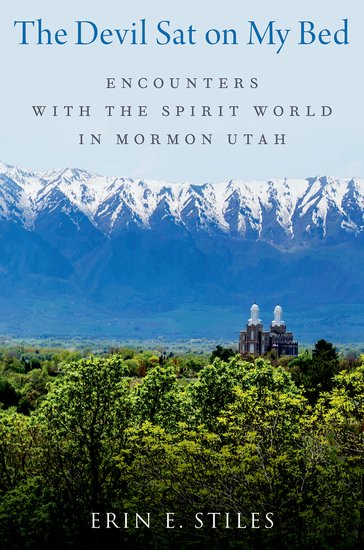
Book takes a look at all those spirit visits we Mormons receive


Review by Doug Gibson

If you are a longtime Mormon like me, you know a healthy amount of the stories out there. There's that missionary who was too confident in his priesthood power and actually summoned a demon. You know how that ended; he tempted evil, and was found with lots of broken bones.

Or there's the story of seeing a large, dark creature. He turns, and his eyes, they're the eyes of Cain! The Spirit whispers, "Stay away." You run.

But there's positive tales out there: It's World War II, and a weary soldier asks a stranger when this cursed war will end. The stranger gives a date. The war ends on that date. It must have been one of the Three Nephites!

I'm taking those yarns, which pop up everywhere, with lots of salt. We've all heard them. But all have a firmer provenance. 

I'm not skeptical of visits from the spirit world, good and bad. The Church of Jesus Christ of Latter-day Saints is a religion that preaches personal revelation. That includes the belief that we can sense, even see and commune -- rarely -- with spirits both dead and yet to be born. On a personal note, I have never had a vision or heard a voice, but I believe I have felt the unseen, spiritual presence/love/support from my deceased son, and my deceased parents. My mother believed she saw the profile of Jesus Christ in the Los Angeles Latter-day Saint temple. Over decades I've shared experiences --- mostly with LDS peers --- of what we felt, heard or saw. And, I even claim to have sensed and felt negative spirits during my life.

It doesn't make us odd -- it makes us Mormons. 

Erin Stiles is a professor at University of Nevada, Reno. She was raised in Cache County, located in northern Utah. She has authored a new, fascinating book, "The Devil Sat on My Bed -- Encounters with the Spirit World in Northern Utah," Oxford University Press, 2024.

Stiles is not a member of the LDS Church, but through her life experiences and research she has a strong understanding of Mormon culture. As she notes, spiritual encounters underscore a type of collective salvation, members of a familial lineage -- alive, dead or not yet born -- working in tandem to influence or prod family members through what Mormons call The Plan of Salvation.

Stiles recounts examples, gleaned through personal interviews and research through archives. One is a long-deceased mother who communicates to her daughter through voice and text messages. In one message, the deceased mother laments that she didn't spend more time with her daughter. Others include adults who talk about meeting spiritual children. Later a child is born who resembles the spirit. 

These good spirits often have names, or the living person senses they are a descendant, and later discovers that to be the case.

As noted, Mormons tend to see morality as a concept and righteousness as a verb. That helps understand why Mormons are receptive to spiritual encounters. Mormonism regards works as paired with faith in receiving a degree of salvation or higher. The spirit world is divided between a type of paradise and "spirit prison." The latter is not really a prison. It represents people who need to be taught Latter-day Saint principles and ordinances of the Gospel. Under Mormon theology, it makes sense to continue religious duties after death. I can't tell you how many times I have heard at LDS funerals where someone will remark that "Brother or Sister (so and so) are really busy teaching the Gospel" in the spirit world.

Temple work is important in the LDS faith because it's designed to provide the deceased a choice to follow what LDS faithful believe are covenants necessary toward a higher degree of salvation, called exaltation. As Stiles notes, it is always a choice of the person. It's not a decree. The idea of agency is important within the faith. 

For that reason, unsurprisingly, Stiles has gathered accounts of spiritual encounters within temples, interaction with spirits who have chosen to receive the post-mortal ordinances. I found fascinating accounts of people performing baptisms for the dead seeing spiritual people watching the baptisms. After every baptism, a spirit would leave, presumably satisfied with his or her baptism.

One of the accounts recall a child spirit left alone after the series of baptisms. This child, seen by one of those performing the ordinance, appeared very distraught. The officiator was asked to review the list of deceased slated for proxy baptism. It was discovered the man had missed one to be baptized. Once that occurred, the child spirit left.

I remember one of my late sisters telling me that she had conversed with the deceased spirit of one of our aunts, who died when I was very young. She eagerly conversed with my sibling, still a child. Frankly, I believe her. These are not carnival tricks to Latter-day Saints. Spiritual encounters occur, as the book notes, to guide those on earth, to protect them, and -- most in my opinion -- to comfort. Expressions of love extend beyond the grave.

As Stiles notes, adversarial spiritual encounters are generally nameless. They include demons on beds, bad ouija board experiences, encounters with Cain. There are many accounts of missionaries dealing with bad spirits. Although the term demon is often used in popular culture, most Mormons would regard these visitors as being rebellious spirits who aligned with the devil, Lucifer, in the pre-existence and were cast out to -- ironically earth. They were denied bodies. Mormon theology considers the number to be a third of all people created.

An example in the book involves unseen spirit women who were whispering to missionaries late at night. The sounds were so loud the missionaries faced accusations of having girls in their rooms. I'm not sure about this one. It may derive from sexual frustration. However, as a missionary myself, we swapped tales of dealing with the adversary.  Another involves rebellious spirits attempting to enter the Logan LDS temple. This is a well-traveled tale. The spirits are stopped, but in some accounts do manage to disrupt temple activities. *

In both cases, males in the Mormon faith used what is called Priesthood authority to cast out the renegade spirits. The patriarchal culture of Mormonism provides near-absolute authority to males in ecclesiastical matters. Stiles notes that in the early years of the LDS Church, women had much more power to "perform ordinances" before church leaders cracked down on that in the early 20th century. Candid interviews with current members provide evidence that the future may hold a loosening on overly patriarchal attitudes on female participation in Gospel ordinances.

"The Devil Sat On My Bed ..." contains fascinating information. It brings to an academic setting what's long been discussed between families, in pews, in Sunday school, firesides, campouts, sleepovers, family reunions, and so on. What happens in northern Utah really happens just about everywhere in Mormon culture. Hopefully this book, which can be a tough read at times due to its academic style, will lead to more books on spiritual encounters and how they relate to Mormon theology and culture.


* I have no disagreement with Stiles' stance that most adversarial spirits are unnamed. However, I have spoken to a handful of people who have a feeling these bad spirits they encounter are acquaintances, or friends from the pre-existence, but chose to follow Satan. Given Mormon culture, I think that idea is worthy of further study.

Sunday, January 23, 2022

Maher’s ‘Religulous’ is funny but not too complicated


Bill Maher’s “Religulous,” a film screed against religion, is very funny and has a lot of truth to it. Religion is pretty screwed up. Maher, who hosts an HBO talk show, grabs at a lot of low-hanging fruit to mock the dysfunctional branches of faith.

Among his targets is a group, called Answers in Genesis, that opine dinosaurs were horses for early man. Other easy targets including a rapping suicide bombing enthusiast, radical Islamics and Jews, and a dimwitted U.S. evangelical senator.

Those are the lazy parts of “Religulous,” where Maher, who is a very intelligent debater, ties his foils into frustrated, rhetorical knots. Of course, he has the advantage — he demands proof. The others rely only on faith. One can’t help but feel that one reason Maher despises faith is that he doesn’t know anyone he would deem as cool who believes.

It would have been interesting had Maher tried to examine faith, and its relationship to theology and religious belief. But “Religulous” won’t tread into the serious. It’s designed to mock those who believe in Christ, virgin births, “magic underwear” or take the Bible seriously … you get the picture. It’s manna for the religion of atheism, of which Maher is a high priest … even if he won’t admit to any “faith.” 

Hey Maher! We know there’s a lot of inconsistencies in religion. How about finding some new ones. I’m tired of seeing Ted Haggard in anti-God screeds. How about examining what Camille Paglia points out, that as the world gets more unstable, more of us turn to God. In “Religulous,” Maher is a reverse Glenn Beck without tears, clucking over those “God-lovers.”

Nevertheless, pop atheism, along the lines of Maher, Sam Harris, Christopher Hitchens, Richard Dawkins, has value. There is a lot wrong with religion today. We have one political party whose members are moving away from it, and another whose members have tried to co-opt it into a political party. In Utah, the LDS faith and the Republican Party have what seems to be an eternal marriage. Maher may enrage in “Religulous” (and there are very blasphemous scenes in the film) but he is taking the time to talk with believers and deconstruct their beliefs. That he wins most of the debates underscores a troubling trend with religion — too many believers can’t defend their beliefs.

Maher’s segment on Mormonism, I’m sorry to say, is a real clunker. Instead of confronting the 21st Century LDS Church, he obviously researched old 19th century speeches that are of dubious value today. It provides punch lines for several doctrines, including a very offensive clip involving Mary and God. The only Mormons Maher talks to are a couple who have left the faith, and there’s the requisite “get kicked off property by LDS security” scene. 

I can think of dozens of Mormon scholars Maher could have interviewed and matched wits with but again, in a pop atheist screed, interesting debate only happens by accident. Maher plays funny but not too complicated. 

In fact, the most interesting parts of “Religulous” are when Maher’s subjects match him in intelligence, or at least common sense. A man who plays Jesus at a cheesy amusement park uses faith to debate on even terms. Even Maher admits he was stumped at one point. There are Christians in a battered truck stop church who ask to pray with Maher. To the host’s credit, he is very respectful of his subjects while interviewing them, although the snarkiness comes out when Maher’s with his crew.

Maher’s conversation with a senior Vatican priest, Father Reginald Foster, is alternately the most rewarding and frustrating part of “Religulous.” Foster, a very candid man, agrees with Maher on many points, including that the authors of the Scriptures can’t be relied on to be in sync with what we know today. Rather than press on and learn something, Maher just basks in the praise of having someone agree with him. How interesting it would have been had he tried to learn why Foster agrees with him and still believes in God. That, apparently, is too much for pop atheism — and Maher — to tackle.

As a close friend said, you can learn more about religion watching “Nacho Libre” than “Religulous.”

Agreed, but “Religulous” is slightly funnier. Watch the trailer here.

-- Doug Gibson

-- Originally published long ago at StandardBlogs

Monday, March 15, 2021

Mormons, Catholics both have to deal with dark side of their histories


There’s an interesting article in the Fall 2013 issue of The Journal of Mormon History. “Evil in the Family: Mormons and Catholics Struggling with the Dark Side of Their Histories,” by Father Daniel P. Dwyer, notes that both the Catholic and Mormon faiths claim their church as the one established by Jesus Christ. Yet, he adds, both faiths share atrocities committed by the most seemingly devout members of the respective faiths.

A lot of Mormons may take offense at their church being adversely compared to Catholicism’s long history of misdeeds. But compare these two accounts of atrocities, offered by Dwyer. Here is the first:

Enrico and the rest of the band held a council and, after sunrise, attacked the Jews in the hall with arrows and lances. Breaking the bolts and the doors, they killed the Jews, about seven hundred in number, who in vain resisted the force and attack of so many thousands. They killed the women also, and with their swords pierced tender children of whatever age and sex. The Jews seeing that their Christian enemies were attacking them and their children, and they were sparing no age, likewise fell upon one another, brothers, children, wives and sisters, and thus they perished at each other’s hands. Horrible to say, mothers cut the throats of nursing children with knives and stabbed others, preferring them to perish thus by their own hands rather than to be killed by the weapons of the uncircumcised.

Here’s the other example:

I saw several bones of what must have been very small children. Dr. Brewer says from what he saw he thinks some of the infants were butchered. The mothers doubtless had these in their arms, and the same shot or blow may have deprived both of life.

“The scene of the massacre, even at this late day, was horrible to look upon. Women’s hair, in detached locks and masses, hung to (sic) the sage brushes and was strewn over the ground in many places. Parts of little children’s dresses and of female costume dangled from the shrubbery or lay scattered about; and among these, here and there, on every hand, for at least a mile in the direction of the road, by two miles east and west. there gleamed, bleached white by the weather, the skulls and other bones of those who had suffered. A glance into the wagon when all these had been collected revealed a sight which can never be forgotten.

The former is an account of Catholic crusaders in 1096 killing Jews trapped in a hall, put there by a bishop for their “protection.” The latter is an 1859 account of the Mountain Meadows Massacre. Two years earlier Mormon “crusaders” had massacred non-Mormon settlers traveling to California. The massacre occurred as the settlers were being led to “safety.”

These are acts of pure evil, encouraged by Satan, if one is a believer. How does one square these massacres with belief in a faith? Dwyer offers three options: “we can try to rationalize the evil and explain it away; we can abandon our respective faiths and deal with, or ignore evil, from the perspective of outsiders; or we can try to admit and understand the evil and look for ways our traditions can help us cope with the aftermath and prevent recurrences.

The third option is often attempted — at least in part — on a singular basis. The LDS Church, for example, has expressed regret for the massacre, among other gestures. The Catholic Church has attempted apologies for much of its sordid history and the priest sexual abuse scandals of the past several decades. However, to fully attempt to live the third option requires consistency. Example: the first option — rationalize and explain away — more or less still defines the LDS Church’s reaction to its “Jim Crow” policies toward blacks in the church, which lasted until 1978.

And, as Dwyer notes, the third option, to be consistent, must apply to all members of a faith, even the most powerful. Compare these two declaration, both from the same era. The first, from Pope Pius IX, in 1864, the Syllabus of Errors (NOTE THAT THE FOLLOWING WAS URGED NOT TO BE BELIEVED BY CATHOLICS):

Good hope at least is to be entertained of the eternal salvation of all those who are not at all in the true Church of Christ.”

“Protestantism is nothing more than another form of the same true Christian religion.”

“The church is not a true and perfect society.”

“The Roman pontiffs have, by their too arbitrary conduct, contributed to the division of the Church into Eastern and Western.”

“Catholics may approve of the system of educating youths unconnected with the Catholic faith and the power of the Church.”

“The Church ought to be separated from the State, and the State from the Church.”

“In the present day it is no longer expedient that the Catholic religion should be held as the only religion of the state.”

“The Roman Pontiff can, and ought to, reconcile himself, and come to terms with progress, liberalism and modern civilization.”

And, in early 1857, several months prior to the Mountain Meadows Massacre, LDS Church leaders Brigham Young shared this with the Saints in Salt Lake City, relates Dwyer:

I have known a great many men who have left this church for whom there is no chance whatever for exaltation, but if their blood had been spilled, it would have been better for them. The wickedness and ignorance of the nations forbid this principle’s being in full force.

“This is loving your neighbor as ourselves; if he needs help, help him; and if he wants salvation and it is necessary to spill his blood on the earth in order that he may be saved, spill it. Any of you who understand the principles of eternity, if you have sinned a sin requiring the shedding of blood, except the sin unto death, would not be satisfied nor rest until your blood should be spilled, that you might gain that salvation you desire. That is the way to love mankind.”

Both statements, from Pius IX and Brigham Young, are repugnant, and remind of the theology of radical Islam today. While Young’s words are more violent, the state theology espoused by the late pope would have likely led to violence. Yet, I’m glad Dwyer chose these two examples, precisely because both Pius IX and Young are beloved, often-honored figures within their faiths. Nevertheless, they made statements that no sensible Catholic, or Mormon, would adhere to today.

As Dwyer notes, there are contexts to the above statements. Both faced challenges by hostile powers. Both wanted to consolidate power for what they felt was a good cause. When looking at these examples, it’s best to understand that doctrine and practices for both faiths, Catholic and Mormon, is dynamic, in fact more dynamic than many members or leaders might see or admit to. That’s a good thing. A failure for any religion to change many of its practices or beliefs would nearly always lead to, at least, social ostracism, or at worst, violence and tragedy.

Later in the JMH essay, Dwyer compares the doctrine of papal infallibility with the role of a Mormon prophet. What happens when a pope, or an LDS prophet, spouts something that isn’t true? One example is Young’s failed effort to institute the “Adam-God Doctrine.” Dwyer offers these explanations:

“... even some of our own people misunderstand the doctrine of papal infallibility. It does not mean that a pope is always correct — even when he teaches doctrine. His teaching is infallible only under severely limited conditions. … So if Pope Francis told me the sky was green, it would still be blue.” Later, Dwyer answers the confusion Mormons may feel over Young’s insistence that Adam was God by writing, “If he was wrong, how could he have been a prophet, seer and revelator? Or, as in Catholicism, is the exercise of of the prophetic ministry something that happens only in very defined situations?

These are interesting topics, and Dwyer’s article explores even more similarities and conflicts between Catholicism and Mormonism. What’s most beneficial is the advice that both faiths acknowledge a sometimes adverse, and wicked, past and that practical dynamism, and human fallibility, will create leaders who make mistakes, even in a church that proclaims itself THE CHURCH OF JESUS CHRIST.

As Dwyer notes, in Romans 3:23, it reads “All have sinned and come short of the glory of God.” The late Mormon scholar Eugene England extolled the strength of the church, its structure, its fellowship, and its role as a place to gain strength and learn to be a more godly individual; all of that occurs, of course, in the present and the future.

--- Doug Gibson

--- Originally published at StandardBlogs in 2013.


Friday, June 22, 2018

Letter to a Doubter important essay from Mormon scholar Givens


LDS author and scholar Terryl Givens’ “Letter to a Doubter” has been widely circulated since he presented the essay/lecture in a speech to a Mormon fireside. The push to acknowledge doubt in one’s spiritual life, indeed to regard the “absence of certainty” as a component of true faith, has gained traction. In LDS General Conference, Apostle Jeffrey R. Holland told those that believe, but do not know, that they are following Christ’s counsel, who said, “Be not afraid, only believe.” (Read)
Givens’ essay is fascinating, and ideally suitable for this era, which is seeing apostasies that result from intense, appropriate scrutiny to long-held assumptions. He begins by pointing out that some “doubts … are predicated on misbegotten premises.” As an example he relates the doubt that troubled late LDS leader B.H. Roberts, who fretted over the many languages of the American Indians. Roberts’ error, which he shared with many church leaders, was assuming that the Book of Mormon spanned the entire Americas. Givens writes, “Nothing in the Book of Mormon suggests that Lehi’s colony expanded to fill the hemisphere. In fact, … the entire history of the Book of Mormon takes place within an area of Nephite and Lamanite habitation some 500 miles long and perhaps 200 miles wide.
The money quote from Givens is this: “You see, even brilliant individuals and ordained Seventies can buy into careless assumptions that lead them astray. That Joseph Smith at some point entertained similar notions about Book of Mormon geography only makes it more imperative for members not to take every utterance of any leader as inspired doctrine.” For longstanding Mormons, that is not necessarily an easy transition. Authority is big in the church, and the words of a general authority, let alone an apostle or prophet, can be a debate-finisher.
But understanding that all people are fallible, as well as a realization that doubt is a component of true faith, are main themes of Givens’ advice. It’s well-needed, because, the LDS Church is losing young adults who are confronted, in an Internet-archived world, with contradictions that can easily dent weak faith that relies on claims of certainty.
Givens offers five components of belief that can lead to doubt. In The Prophetic Mantle, he reminds readers that the Scriptures, including The Bible, are full of prophets who err. They include Abraham. Moses, Jonah, and Paul. Givens writes, citing LDS Prophet Spencer W. Kimball’s repudiation of Brigham Young’s Adam-God heresy as an example, “… when Pres. Woodruff said the Lord would never suffer his servants to lead the people astray, we can only reasonably interpret that to mean the prophet will not teach us any soul destroying doctrine—not that they will never err.” Again, this addresses the incorrect assumption that whenever a prophet speaks, he is absolutely correct. This weak idea is easily disproved — just read many of Brigham Young’s discourses — but it can do damage to persons who demand no errors in their belief.
Another issue Givens addresses is the mistaken idea that God was silent on issues of theology, and that the Christian church was inactive, for centuries prior to 1820, when Joseph Smith received the First Vision. Instead, Givens urges those with doubts to see Smith’s mission not as starting over, but “that of bringing it all into one coherent whole, not reintroducing the gospel ex nihilo.”
The third part of Givens’ essay addresses the idea of “Mormon Exclusivity,” or the assumption that in a world of several billion, a few million Mormons have a “monopoly on salvation.” Givens then points out something that I deeply appreciate about my religion, that it offers salvation to virtually all of God’s children. He writes, “… the most generous, liberal, and universalist conception of salvation in all Christendom is Joseph Smith’s view.” Givens stresses the theology that “here and hereafter, a multitude of non-Mormons will participate in the Church of the Firstborn.”
The final two points of Givens’ essay are a rebuttal to the idea that organized religion is unnecessary and the misbegotten assumption that belief automatically brings personal satisfaction and personal revelations of truth. He explains that the gospel of Christ is a message that invites inclusion, and sharing, and spiritual sociality that exists on the earth, will exist in the afterlife. He writes, “In this light, the project of perfection, or purification and sanctification, is not a scheme for personal advancement, but a process of better filling — and rejoicing in — our role in what Paul called the body of Christ …
As for the personal feelings of failure, disappointment, despair, and general unhappiness, traits that do not go away even when we profess a belief, Givens advises “three simple ideas: be patient, remember and take solace in the fellowship of the desolate.”
As Givens continues, “Patience does not mean to wait apathetically and dejectedly, but to anticipate actively on the basis of what we know; and what we know we must remember.”
Memory is a powerful component of faith and belief. One reason we are taught to gather in organized churches is to participate in the Sacrament, where we remember what Christ’s sacrifice has done for us.
And, as Givens relates, membership in the Society of the Desolate is something to be proud of. Its members include Mother Teresa, whom Givens quotes, said “I am told God loves me — and yet the reality of darkness and coldness and emptiness is so great that nothing touches my soul. … Heaven from every side is closed.”
If we take nothing else from “Letter to a Doubter,” please understand that even the most spiritual feel spiritually alone, not rarely but often. That too, is a test of faith.
In his conclusion, Givens urges that we be “grateful” for our doubts. He adds, “I am grateful for a propensity to doubt because it gives me the capacity to freely believe. … An overwhelming preponderance of evidence on either side would make our choice as meaningless as would a loaded gun pointed at our heads.”
I lack the talents Givens possesses to do justice to his discourse/essay, so I urge readers, again, to read it carefully. It’s important that we not allow our doubt to be exploited by others, but use it as an advantage designed to strengthen our spiritual beliefs.
(Letter to a Doubter can be purchased for 99 cents on Kindle.)
-- Doug Gibson
-- Originally published at StandardBlogs

Monday, January 8, 2018

'The Mormoness' gets a reprint 163 years after its publication


Greg Kofford Books, as part of its The Mormon Image in Literature series, is re-publishing “The Mormoness: or, the Trials of Mary Maverick, a Narrative of Real Events." That’s quite a mouthful for an 1853 novella of about 25,000 words.
Written by a minister/educator/journalist of some note named Professor John Russell, it’s 1853 publication, in serial form, is significant because it’s virtually the only work of Mormon fiction derived from non-church sources that is sympathetic to Mormonism. But sympathetic is not intended to mean that Russell had any warm feelings toward the doctrines of the Latter-day Saints, and its founder. Indeed, Russell was contemptious of its doctrines, its leaders, its scriptures and lamented individuals who were ”ensnared“ by it.
But Russell was unique in that he vociferously condemned persecution of the young faith, primarily for two reasons. The first was that it violated the constitutional rights of Mormons. The second reason, more personal, was Russell’s fear — probably accurate — that outrage over Mormons being persecuted incited public sympathy for their plight, and improved the faith’s missionary efforts. In ”The Mormoness“ he writes: ”Employ Force and violence to put down the wildest delusion that fanaticism ever invented, and you inevitably insure its success. ... It is strikingly verified in the case of the Mormons. Hundreds who ridiculed the absurdities of that creed when its followers were unmolested, fell directly into the snare of Mormonism when their sympathies were awakened by seeing them calmly enduring persecution and death for their cause.“
In fact, Michael Austin and Ardis E. Parshall, who edit and annotate this volume, include a letter Russell wrote in 1841 to Thomas Gregg, the editor of the extremely anti-Mormon Warsaw Signal, chiding his friends for the newspaper’s tone. Russell was prescient when he wrote, ”I have not a doubt but that the Signal will destroy the settlement and town of the Mormons. I am fearful that on opening the next number I shall see the event announced in starring capitals.“ But he added, “the excitement will soon fade away and the deepest feelings of sympathy be awakened for that people. Their errors will all be forgotten in their suffering.
Gregg was not as murderous a foe of Mormons as another Signal editor, Thomas Sharp, and the editors note that under Gregg’s guidence, the paper took a less harsh tone with Mormons and Nauvoo.
As for “The Mormoness,” Russell based the main characters, very loosely, on a father and son who were killed at The Hauns Mill Massacre in Missouri, leaving a widow. The Maverick family, James, Mary, and son Eddy, live in Sixteen Mile Prairie, a small settlement. They are happy, pious and very content, Mary such a wonderful housekeeper and mother that she inspires envious gossip from peers. James, once a vociferous opponent of Mormonism, is converted. Forced through pressure to give it up, he fears for his soul and nearly dies. To bring him back to health, Mary decides to convert to the faith. The family falls from esteem and eventually moves.
In Russell’s tale, the family grows in the faith, all are converted. On the night of the Hauns Mill-type  massacre, both James and Eddy are killed. Deeply depressed, Mary, the heroine, gathers her faith and courage and dedicates her life to Christ-like behavior. Russell shares passages in which Mary, a veritable saint, teaches children, is proposed to, unsuccessfully, by a rich man, goes among native Americans, nursing them through cholera, and gains the respect of everyone she meets, despite suffering discrimination due to her religion. The theme is clear — anything evil or bad that is thrown at Mary Maverick is returned with an excess of love, thereby increasing her esteem, and by extension Mormonism.
The climax of the novella involves Mary’s crisis when she discovers she is nursing back to health the man who killed her husband and son. A conflict arises when the man, enamored of her, insists they be married. 
As literature, this melodramatic tale will cause no sleepless nights to defenders of Charles Dickens. But it is readable, and I found myself eager to finish it in a sitting. Russell is progressive enough, for a faithful mainstream Christian of that time, to describe Mary Maverick as an example of a Christian, despite her religion. With his text, he shows how great suffering and humility moves the protagonist deeper into her faith, and a Christlike existence.
He writes, “These unmerited and cruel wrongs, inflicted upon that sect, and especially upon her own husband, made a deep impression upon the feelings of Mary, They enlisted her sympathies in the cause of the injured, and had a thousand fold greater effect than all the arguments of the prophet himself could have had, to change her opinions. Insensibly to herself, the daily abuse unjustly heaped upon her husband wrought an entire change in her views of Mormonism, and she now joined heart and hand with that sect, and willingly united her destiny with theirs. Such is ever the effect of persecution, even of those most deeply in error.”
Other portions of the book include a biographical sketch of Russell, the aforementioned letter to the Signal’s editor, and a chapter from another book Russell penned, an attack on Universalism.
-- Doug Gibson
-- Previously published at StandardNET

Monday, August 21, 2017

Freemasonry and Mormonism have had a contentious history


Michael W. Homer is the author of “Joseph’s Temples: The Dynamic Relationship Between Freemasonry and Mormonism.” Published by University of Utah Press, it covers the contentious history of Freemasonry and Mormonism that lasted well more than 150 years. It’s been a history of twists and turns, strategies, claims and counterclaims, with the establishment Freemasonry long having the upper hand in repudiating the Mormons, who were of course unpopular for scores of years. However, as society moved closer toward the 21st century, anti-Mormon Freemasons become more scarce, and bans on Mormons being masons eventually ended.
It’s a colorful, self-serving and sometimes even tawdry history of the conflict between Mormons and Freemasons, and Homer’s scholarly book lends the subject more dignity than it probably deserves. It is certainly an interesting historical tale. Despite a century-plus of “this opinion, that opinion, denials and complicated explanations,” it’s pretty clear that Mormonism and Freemasonry have similarities, particularly in the church’s temple endowment ceremonies.
It’s worth noting that Homer explains that the Mormon ceremonies evolved toward more similarities as the church moved to Nauvoo. By the time that Mormon leader Joseph Smith was murdered by a mob, Nauvoo had a large Freemason presence, one which slowly but consistently was denied certification by non-member Freemason leadership in surrounding areas. After Smith’s death and the eventual Mormon migration to Utah, it became the standard practice of Freemasonry to bar Mormons from the group. What seems ironic at first glance to me, a novice on this subject, is that the most fierce anti-Mormon Freemason organization was its Utah chapter, which banned Mormons well into the deep 20th century. But Homer’s book also details a Freemason hierarchy in Utah that effectively was a branch of Utah’s anti-Mormon presence in the early days of the state. 
This Freemason opposition to the Mormons stemmed, of course, from the practice of polygamy, but also from the Mormon’s temple endowment ceremonies, which were regularly “exposed” — not often accurately — in the 19th century. One objection that likely had teeth was that ceremonies could be construed as hostile to the U.S. government. Another objection against Mormons by Freemasons was that the LDS temple ceremonies included women.
But, reading the book, one gets the impression that Mormonism was so unpopular 100-plus years ago that it was simply a mainstream position to damn the faith when opportunities arose. Homer’s book links the Mormonism and Freemasonry contention to events such as the federal government’s efforts to wrest control of Utah territory from Brigham Young and even the U.S. Senate hearings in the early 20th century over Reed Smoot’s effort to gain acceptance into the Senate.
As for the Mormons, Homer’s research includes an interesting history of the LDS Relief Society’s beginnings and its eventual decline in prominence under Smith’s successor, Brigham Young. It’s a valid question as to whether Smith had a larger ecclesiastical role intended for Mormon women which might have included blessings and priesthood-like authorities. He does add, though, that these questions remain speculation, and cites early Mormon leaders who seem to have agreed with Young on women’s roles in the church.
As the 20th century approached, the Mormon Church leadership, perhaps stung by the hostility from Freemasonry, began to downplay its Nauvoo-era interest in Freemasonry, arguing instead that any elements of temple ceremonies that appeared to be similar to Freemasonry was instead evidence of Freemasonry’s corruption from its original origin, which came from the days of Solomon’s temple. In other words, Mormons argued that its prophet Joseph Smith had received the proper endowments and procedures for temple ceremonies — via revelation — from heavenly visitors. Advocates of this position included Mormon intellectuals B.H. Roberts and Hugh Nibley. Mormons also taught that Freemasonry belonged to an unrighteous category of secret and oath-bound groups, and discouraged their members’ participation as masons.
However, in the last few generations or so, Mormonism has acknowledged a connection, albeit superficial, between Freemasonry and its endowment procedures. as Homer notes, Smith biographer Richard Bushman, Homer adds, concedes that Smith was influenced by freemasonry but a key difference is that Mormon temple ceremonies stress exaltation for the husband and wife, rather than “male fraternity.” Nibley later wrote that Mason “rites present unmistakable parallels to those of the temple.” Nibley did add that the similarities were due to a “common ancestry” and not related to salvation rites. Homer’s book notes that in 1989, the LDS Church, in its handbook. also lessened its emphasis against “secret and oath-bound” organizations. 
I haven’t done justice to the wealth of detail and background that Homer provides in Joseph’s Temples, and perceived temple connections to Royal Arch versus Craft Freemasonry. It’s a fascinating read. 
-- Doug Gibson
Previously published at StandardBlogs